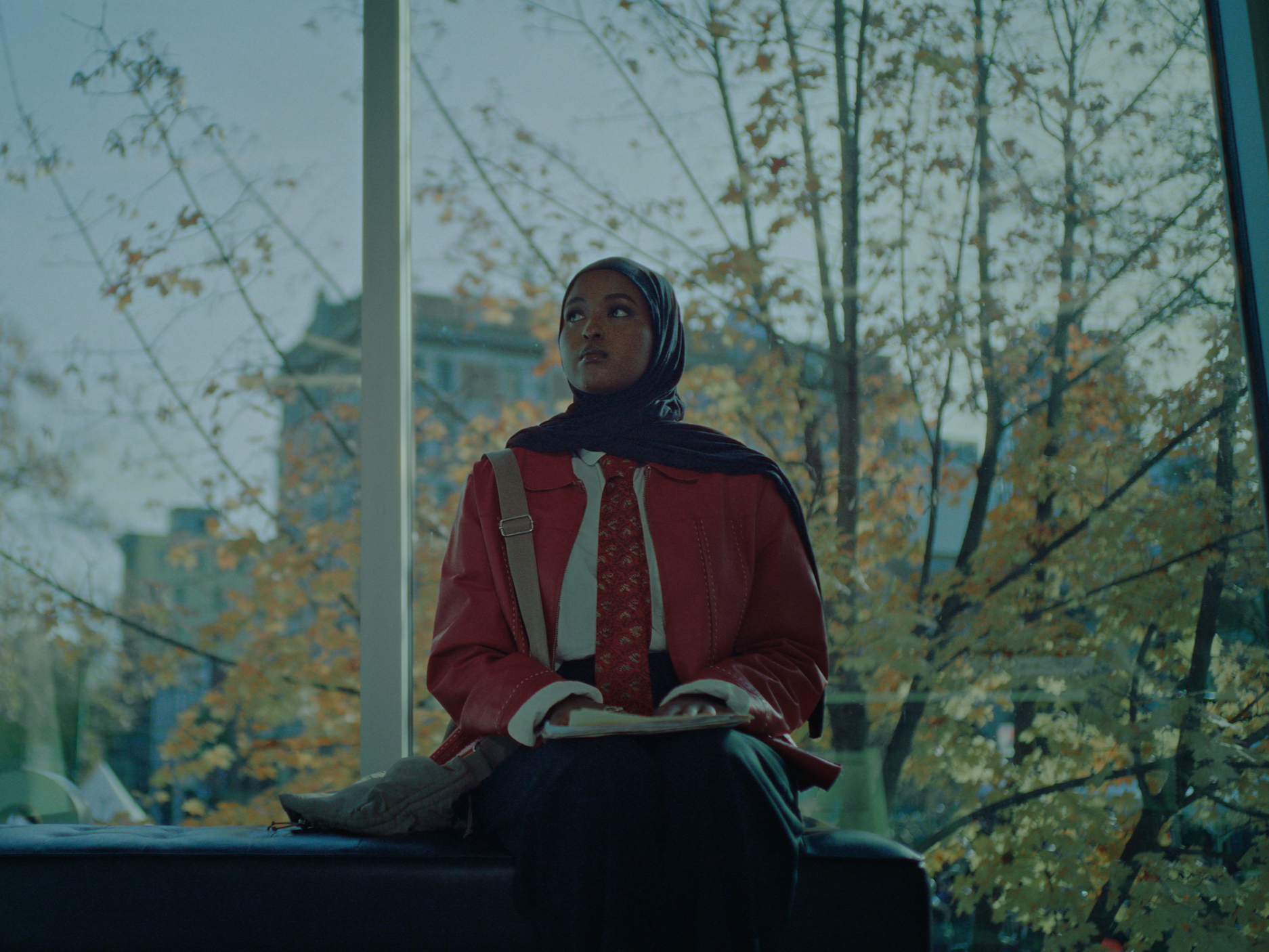
Drawing from director Ilhan Abdullahi’s longstanding work alongside refugee and Black communities in Vancouver, Lifeline brings warmth, humour, and complexity to a story grounded in the Somali Canadian experience. In Lifeline, when a high school basketball star is wrongfully convicted of a crime in a suburban neighborhood, his family’s pursuit of a better life is shattered. Ibtisam Farah, a high achieving Somali youth worker is forced to take on the case, which catapults her into a world of crime and forces her to connect with a community she is estranged from.
For people who are discovering you for the first time, could you tell us a little about yourself and your background?
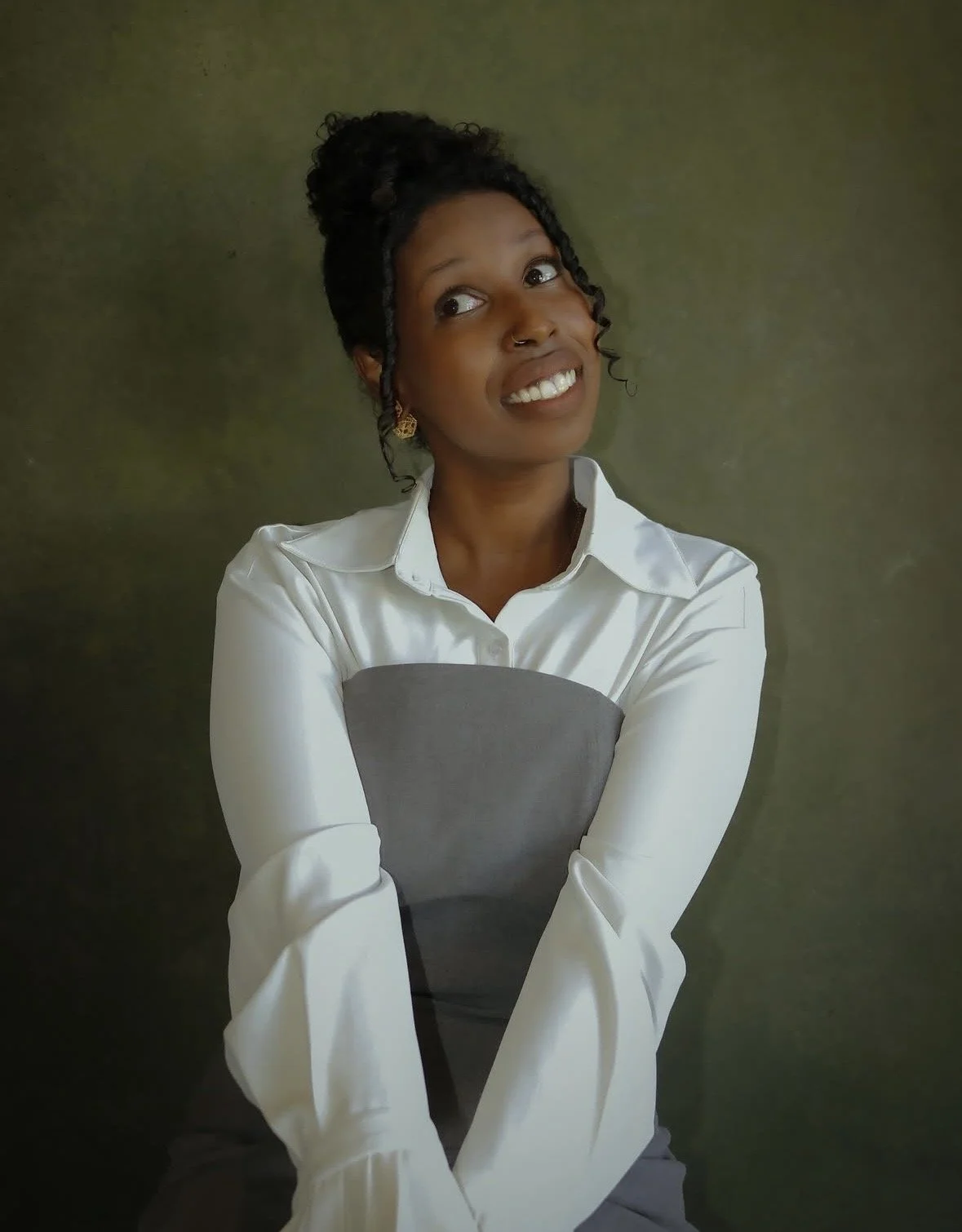
My name is Ilhan Abdullahi, and I’m an independent filmmaker based in Vancouver, BC. I’m also a community organizer, and my community work is what led me to the story I’m telling now: Lifeline. It’s a character-driven independent feature film about a young Somali basketball player who’s excited about the opportunities ahead of him and the new chapter his basketball career might bring. Unfortunately, he gets set up and ends up under house arrest. A Somali youth worker, Ibtisam, is assigned to figure out whether he’s guilty and work alongside the lawyers. At first, the film might seem like a legal drama, but as the story unfolds, you realize it’s really about these two characters and their families. The film was inspired by my own experience as a youth worker, a job I did for quite some time in my twenties. In many ways, I saw myself in Ibtisam. I remember thinking that some of the young people I worked with might be getting into trouble because they’d done something wrong. I had my own biases, and I had to unlearn them. I’d wanted to become a filmmaker for a long time, but, like many people, I couldn’t figure out how to break into the industry. Eventually, I decided to carve out my own path. I started making short films with my friends, my community, and other filmmakers. Twelve years later, we made a feature film.
I had the opportunity to watch Lifeline, and I thought it was such a beautiful story. Do you remember the original spark that made you feel this was a story you had to tell?
There were two moments that really inspired me. The first was when I started working as a youth worker. I felt like a fish out of water, almost as if I were living a double life. I’d meet different young people every day, and at the same time, I was trying to write more scripts because I really wanted to become a filmmaker. I remember the resistance I experienced when I tried to get young people to sign up for my programs. They didn’t necessarily trust me, and I thought, “This would make such a good movie.” But figuring out how to make that movie was incredibly difficult. The second spark came when I watched Ava DuVernay’s series When They See Us. It reignited something in me. I was finally seeing a story that felt close to the stories I wanted to tell, and I realized it was possible. DuVernay has spoken about how she didn’t begin making films until she was in her thirties. When I watched the series, I was around thirty, and I remember thinking, “Oh my God, I can do this, too.” The series deals with wrongful convictions and young people, which connected directly to the themes I wanted to explore. It made me feel that it was time to stop waiting and start making the film.
You’ve worked across different fields, but what drew you specifically to filmmaking rather than telling these stories through another medium?
I’ve always loved cinema. In my spare time, when I’m not working or teaching, I’m usually at the movies or reading. I even buy screenplays. I used to go to bookstores, look for scripts I could read, and choose those over books. I’d read a screenplay and then watch the film, and I realized just how much I loved the medium. My family came to Vancouver in the early 1990s, and my grandmother was the person who raised me. She didn’t speak English, but we always had the television on. I think movies helped me see the world in an interesting way. I was particularly drawn to stories about misfits: people trying to find themselves and feeling like they didn’t quite fit in. Edward Scissorhands is one example of the kind of story that resonated with me. Poetry is also a huge part of Somali culture, but I never felt that it spoke to me in quite the same way. I love reading, but filmmaking was the medium that really clicked. Even in high school, I was the kid who turned every project into a film. I’d make short films for class assignments, and my teacher would ask, “This is a history class. Why are you making a film?” And I’d think, “I just really want to!” That’s when I realized that film was the right medium for me.
One thing I particularly enjoyed about Lifeline was Ibtisam. She’s trying to help someone else while also navigating her own hardships. How did you develop such a multifaceted character, and what did you want to explore through her journey?
That’s a great question. There were a few layers to creating Ibtisam. First, I wanted to create a character I felt we hadn’t seen very often on screen: someone authentic, funny, and charming. Women who wear hijab are often portrayed in the media as reserved or sheltered. I wanted to show a fierce young woman who wants a promotion and is working incredibly hard to be recognized. I think many of us can relate to that experience. At the same time, she had to be flawed. We’re all flawed as human beings, and I wanted her relationship with the young man to have more tension than simply her believing he might not be innocent. I kept asking myself what else could create conflict between them. Through my community work, I’ve witnessed a lot of loss, grief, and hardship. That made me wonder what Ibtisam might be carrying herself. I spent a lot of time in story-editing sessions with my story editor trying to understand who she was and what might trigger a deeper emotional response in her. Eventually, I decided that someone in her family had lost their life. Then I had to figure out who that person would be and how that loss would shape her. A lot of Ibtisam is drawn from people I know: relatives, cousins, and members of the community I’ve worked with. I wanted to create someone audiences could recognize, regardless of whether they’re Somali or wear hijab. I wanted people to watch her and think, “I know someone like this,” or even, “Maybe I’m that person.”
You’ve described Lifeline as a love letter to the Somali community. What does that mean to you, and what do you hope audiences take away about Somali life after watching the film?
I love that description. Even choosing the title took me years. Eventually, I settled on Lifeline because I believe community is a lifeline for so many people. We see what happens when people become isolated and feel they have no sense of community. It affects their well-being in profound ways. I wanted to make a film that portrays our community as vibrant and full of life while also showing that everyone experiences hardship. What matters is how we respond to those difficulties. The timing of the film’s release is significant, too. We’re seeing a lot of anti-Somali rhetoric in the media, particularly in the United States, alongside rising Islamophobia more broadly. People often fear what they don’t know or understand. I wanted to create a film that offers another perspective: one that shows our community in a beautiful, human way. Collectivism is incredibly important in Somali culture. We show up for one another, and I wanted to explore what becomes possible when people come together. There are also so many harmful stereotypes in films about Somali people that aren’t made by Somali filmmakers. We see examples of that in films such as Captain Phillips and Black Hawk Down. I wanted to tell a story that presents the Somali community differently. That doesn’t mean pretending we’re perfect. Nobody is. But good things can happen when people support one another and work together. I also wanted the film to feel hopeful. I could have ended it in a way that reflected the injustices we see all too often, with insufficient evidence leading to someone going to prison. But the world is already a difficult place, and I wanted to leave audiences with some hope.
You independently produced and brought this film to life, which is an enormous undertaking. What was the biggest challenge, and what did the experience teach you?
Patience. That’s probably the biggest lesson I learned. When you’re trying to reach the finish line, you have to be adaptable. We faced so many hurdles, and making a film on a limited budget is already difficult. Making one that needs a large number of people is even more challenging. We wanted the film to feel like a real community. When Ibtisam attends a community hearing, for example, it couldn’t look like five people sitting in a room. We needed a crowd, different opinions, arguments, and the energy of a community coming together. At first, we wondered whether we could pull it off. It felt incredibly ambitious given how little money we had. But something remarkable happened: our community showed up for us. We had aunties who usually didn’t like being on camera agree to appear in the film. People cooked for us on set, and more people came out to help than we had anticipated. The whole community was excited about what we were trying to do. There was a moment when several of us on the team became emotional because we realized that what was happening on set was exactly what the film was about. We were making a story about collectivism, and our community was coming together to make that story possible. We also had to work around tight schedules. Many of the talented filmmakers on our team were juggling other projects, and we had to shoot everything in about fifteen days. There were financial constraints, time pressures, and plenty of uncertainty. But the experience
Some viewers may never have encountered a story like this before. What do you hope they take away from the film?
I hope people learn not to jump to conclusions or run with assumptions. That’s a lesson I’m continually learning myself. No matter our backgrounds, we all have biases, and I think it’s important to pause and question them. For some viewers, this might be their first time learning about Somali people or encountering a Somali family on screen. I hope the film encourages them not to accept everything they see in the media as the whole truth, but to become curious about their neighbours, different communities, and experiences beyond their own. I also hope people leave the film thinking about someone they know, whether that’s a young person, a relative, or a family member. When I watch a film, I want to reflect on it afterward. I’d love for Lifeline to inspire conversations. Maybe someone sees Ibtisam and recognizes themselves in her. Maybe they think about how hard they’re working for a promotion and how frustrating it feels to be tokenized. I hope audiences have some kind of aha moment, even if it’s a small one.